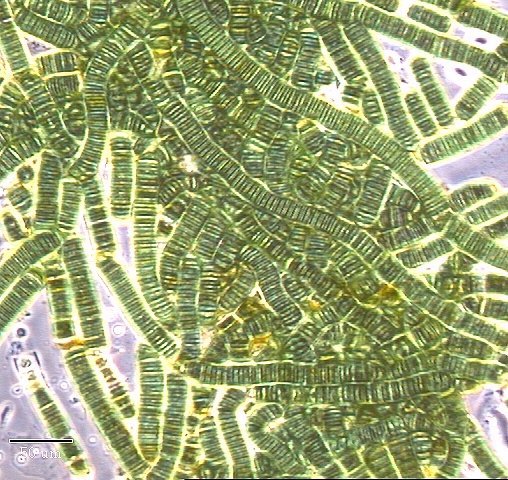


The Cyanobacteria
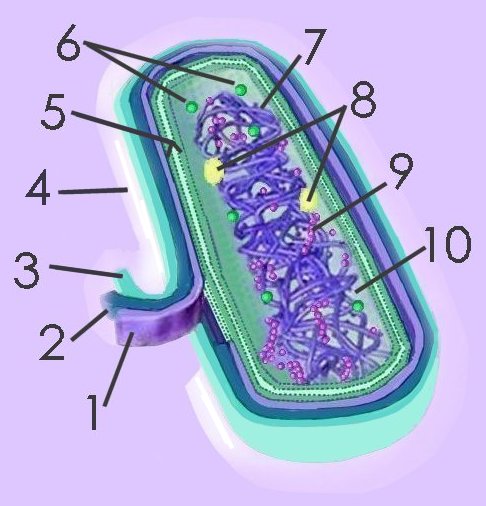 The structure of a cyanobacterium (right):
1. cytoplasmic membrane
2. cell wall - gram negative
3. capsule
4. mucoid sheath
5. paired thylakoid membranes studded with phycobilosomes
6. cyanophycin granules
7. nuclear material
8. carboxysomes (polyhedral structures that resemble bacteriophage heads. Carboxysomes comprise 5-6 proteins forming a shell around the ribulose bisphosphate carboxylase. Carboxysomes are believed useful in situations of low carbon dioxide concentration because they concentrate CO2 inside the structure, increasing the efficiency of ribulose bisphosphate carboxylase.
9. 70s ribosomes
10. cytoplasm
The cyanobacteria were formerly called "blue-green algae" because of their ecology and their resemblance to the algae. However, cyanobacteria are prokaryotes, lacking a nuclear membrane and membrane-bound organelles, though they do have internal membranes. The algae are eukaryotes, possessing both a nuclear membrane and membrane-bound organelles.
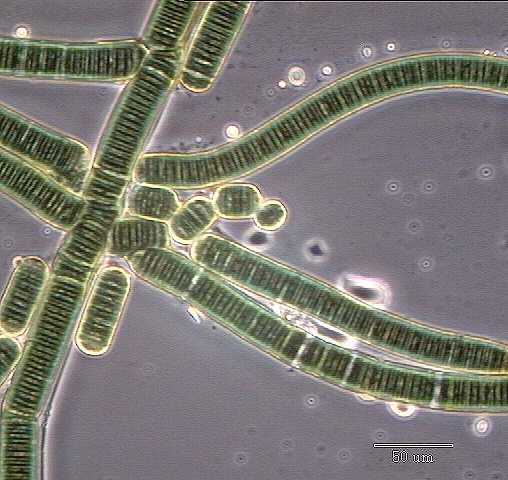 A filamentous Cyanobacterium, Lyngbya sp. (left),
 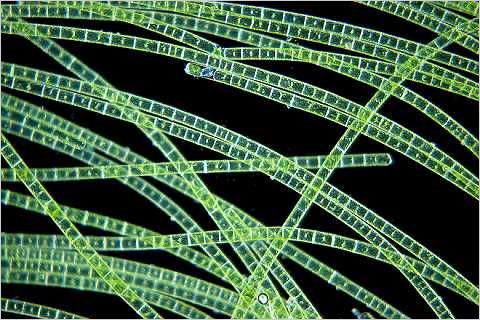 compared to the filamentous algae, Spirogyra (right). Click on image for larger photomicrograph.
The serial endosymbiosis theory (SET) of the prokaryotic origin of eukaryotic chloroplasts and mitochondria is widely accepted. There is little doubt that the chloroplasts of green plants are derived from Cyanobacteria.
Although the Cyanobacteria were not the first cells to evolve on the planet, the "self-fossilizing" activity of Cyanobacterial mats has left us with the oldest fossils.
Labels: blue-green algae, carboxysome, chloroplasts, Cyanobacteria, cyanophycin, phycobilosomes, thylakoid membrane
| 0 Guide-Glossary

 Cyanobacteria